Selling a Home with Polybutylene Pipes? How to Keep Your Closing on Track
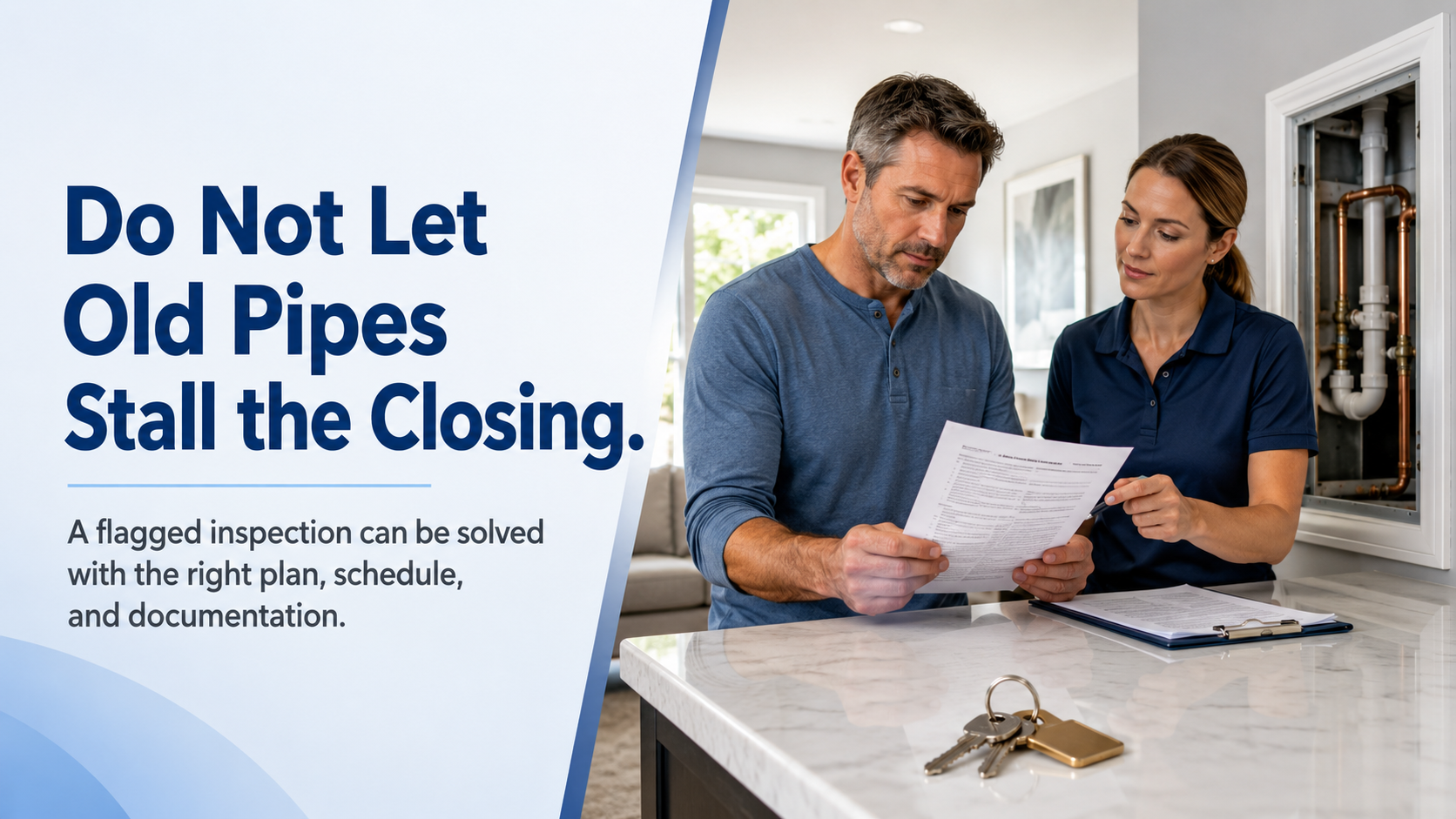
A home sale can move smoothly until one inspection note changes the whole conversation. If the buyer, inspector, lender, or insurance review flags polybutylene pipes or another plumbing concern, the closing can suddenly feel at risk.
That does not mean the sale is over. It means the seller needs a fast, organized plan. LCP Home Services helps Southwest Florida homeowners and agents understand the repipe issue, document the work, and keep the transaction moving with clear communication.
Can a flagged plumbing inspection stop a home sale?
Yes, a flagged plumbing issue can delay or complicate a home sale, especially when the buyer’s financing or insurance review requires the issue to be addressed before closing. FHA and VA financed purchases can be especially sensitive to property condition concerns, including plumbing defects that may affect safety, function, or long-term habitability.
The important part is that a flagged inspection is usually a problem to solve, not an automatic dead end. Once the concern is identified, the next step is to understand what the buyer, lender, insurer, and contract actually require.
What buyers’ lenders typically require before financing will proceed
Sellers and agents should also remember that the plumbing issue becomes part of the buyer’s confidence in the home. Even when financing is not the main obstacle, a buyer may ask whether the home is insurable, whether future leaks are likely, or whether the pipe material will hurt resale later. Addressing the concern clearly can help keep emotions out of the negotiation.
A lender may ask for proof that the plumbing concern has been corrected, especially if the inspection or appraisal calls out defective pipes, active leaks, water damage, or a problem material such as polybutylene. The lender may also want invoices, photos, permits when applicable, and confirmation that the work was completed by a licensed contractor.
Requirements vary by loan type and lender. Sellers should ask the buyer’s agent to get the exact condition in writing so the repair plan matches what is needed to move the file forward.
How a flagged inspection affects negotiations
Once a plumbing issue is on the table, sellers usually face a few options. They can complete the repipe before closing, offer a price concession, negotiate a repair credit where allowed, split the cost with the buyer, or discuss escrow options with the closing team.
The right path depends on timeline, financing, the buyer’s comfort level, and the size of the issue. A fast written estimate from LCP Home Services can help both sides negotiate with real information instead of guessing.
The estimate should be written in plain language. It should identify the concern, explain the recommended scope, clarify what is included, and give the agent enough detail to communicate with the other side. Vague repair notes can slow a transaction because each party may interpret the fix differently.
What sellers should do first once a flag comes back
First, get the inspection language, lender request, or insurance concern in writing. Second, call for an evaluation and share the closing date. Third, ask what documentation will be needed after the work is completed.
Do not rely on verbal summaries alone. The phrase “plumbing issue” can mean many things, but a lender or insurance company may be asking for something very specific.
Coordinating a repipe around a closing date
Time-sensitive repipe projects require tight communication. The seller, agent, title company, buyer’s side, and contractor should all understand the deadline, access needs, documentation requirements, and any restoration expectations.
If the closing date is close, sellers should make access easy. Clear under sinks, confirm who can approve work, ask the agent how documentation should be delivered, and make sure the contractor knows about any inspection, re-check or lender deadline. Small communication gaps can cost days during a transaction.
LCP Home Services cannot guarantee a closing date because lenders, agents, inspectors, and title teams all control different parts of the process. What the team can do is respond quickly, provide a clear scope, prioritize urgent scheduling where possible, and help sellers understand what comes next.
If a flagged pipe issue is putting your sale at risk, schedule a free repipe estimate as soon as possible. The earlier the home is evaluated, the easier it is to protect the timeline.
Call 239-539-2325 or schedule service online to request help with a home-sale repipe situation.
FAQ
Who typically pays for a repipe when it comes up during a home sale, the buyer or the seller?
It depends on the contract, negotiation, inspection findings, financing terms, and market conditions. The seller may pay, the buyer may accept a credit, or both sides may negotiate a shared solution.
Can a sale close before the repipe is finished, with funds held in escrow?
In some transactions, escrow arrangements or post-closing repair agreements may be discussed, but approval depends on the buyer, seller, lender, title company, and contract terms. Sellers should confirm this with their agent and closing team.
Will a repipe show up on a home inspection report even if there are no current leaks?
A completed repipe may be noted as an upgrade if visible materials or documentation are available. If old or problem piping is still present, an inspector may flag the material even when there are no active leaks.