How Long Do Copper Pipes Last? A Guide to Pipe Lifespan by Material
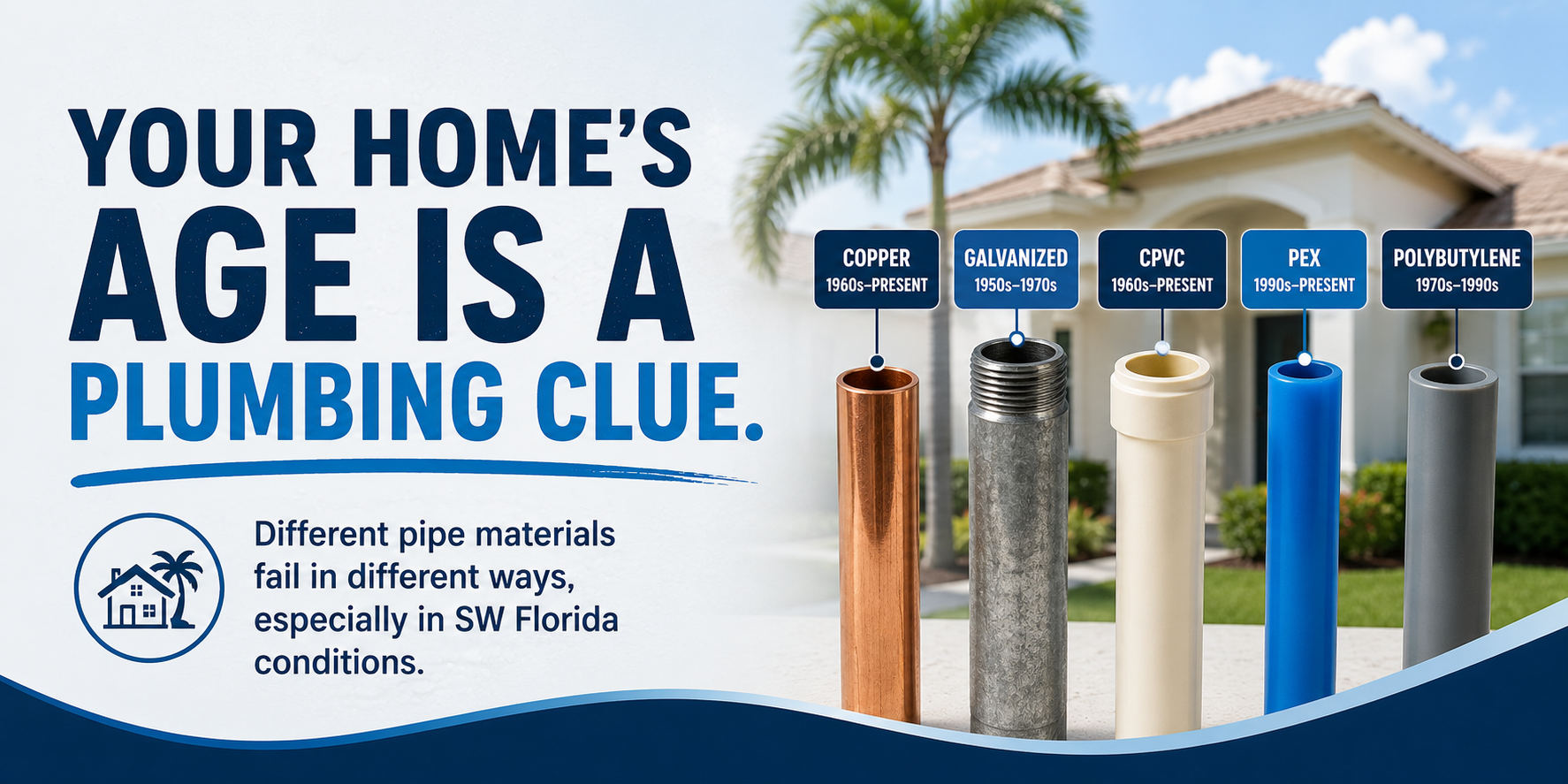
Pipe age matters, but it is not a countdown clock. Two homes built the same year can age very differently depending on pipe material, water chemistry, installation quality, pressure, maintenance history, and local conditions.
In Southwest Florida, salt air, humidity, chlorinated water, hard water conditions, and acidic groundwater can all affect how long plumbing pipes last. That is why pipe lifespan should be treated as a planning guide, not a guarantee.
How long do plumbing pipes actually last?
Plumbing pipe lifespan depends on the material and the conditions around it. Copper, galvanized steel, CPVC, PEX, and polybutylene all age differently. The safest way to know where your home stands is to combine the material age with signs such as recurring leaks, pressure changes, visible corrosion, or inspection concerns.
This is also why a pipe lifespan chart should never replace a real inspection. A chart can tell you what is common. It cannot tell you whether your water heater connections are stressed, whether one branch line has corrosion, whether a previous repair used mixed materials, or whether the pressure in the home is accelerating wear.
If your home has older piping and you are not sure whether repair or replacement makes sense, LCP Home Services can help with a whole-home repipe evaluation that looks at the actual system, not just the year the home was built.
Copper pipe lifespan
Copper pipes are known for durability and may last 50 years or longer in favorable conditions. In Florida, that lifespan can be affected by water chemistry, chlorinated municipal water, coastal exposure, and corrosion that leads to pinhole leaks.
Copper can also be difficult because the outside of the pipe may look mostly normal. Pinhole leaks can begin small, then repeat in different areas over time. If one copper pinhole leak is followed by another, the conversation should shift from patching the newest point to evaluating the full system condition.
Common warning signs include blue-green stains near fixtures, small pinhole leaks, slab leak concerns, pressure drops, or a pattern of repairs in different areas. Copper does not always fail all at once, but repeated pinhole leaks can signal that the system deserves a closer look.
Galvanized pipe lifespan
Galvanized piping is older steel piping that can corrode from the inside out. Many galvanized systems become restricted over time, which can reduce flow before the homeowner sees a visible leak.
A typical planning range for galvanized piping is often 40 to 60 years, but many homes experience performance problems sooner when corrosion, acidic groundwater, or mineral buildup speeds up internal deterioration. Low pressure, rusty water, and slow fixture flow are common clues.
Galvanized pipe can be especially frustrating because the inside of the pipe may be far worse than the outside suggests. A homeowner may call about weak pressure, slow hot water, or rusty discoloration before ever seeing a visible leak. By the time those symptoms appear, the system may already be restricted.
CPVC pipe lifespan
CPVC was used in many Florida homes and can perform well for years, but it may become brittle as it ages, especially when exposed to heat, attic conditions, poor support, or repeated stress at fittings.
Many homeowners do not notice CPVC concerns until a line cracks or a fitting fails. If CPVC feels brittle, discolors, cracks during repairs, or has a history of sudden leaks, replacement may be worth discussing.
PEX pipe lifespan
PEX is commonly used as a modern repipe material. It is flexible, can reduce the number of fittings in some layouts, and is often selected for whole-home repipe projects. Like any material, its performance depends on correct installation, code compliance, water conditions, and protection from UV exposure.
For CPVC and PEX, installation quality is a major part of the lifespan conversation. Proper support, correct fittings, protection from heat or sunlight, and clean transitions all matter. A newer material installed poorly can create problems, while an older material installed correctly may perform longer than expected.
Homeowners comparing PEX and copper should focus less on a generic lifespan chart and more on what material fits their home, water quality, budget, and long-term service goals.
Polybutylene pipe lifespan
Polybutylene is different from normal aging pipe concerns because the material itself has a known history of failure concerns. Many Southwest Florida homeowners discover polybutylene during an insurance review, home inspection, repair, or renovation.
If you suspect polybutylene, do not rely on age alone. Confirm the material and condition. Then review the dedicated polybutylene pipe replacement guide or schedule an inspection with LCP Home Services.
When pipe age should become a repipe conversation
Old pipes do not automatically mean a home needs repiping. But age plus repeated leaks, pressure problems, visible corrosion, rusty or discolored water, insurance concerns, or home sale issues should move the conversation from simple repair to full system evaluation.
A free whole-home evaluation can help you understand whether the plumbing system is still dependable or whether repiping gives the home a stronger long-term path.
Call 239-539-2325 or schedule service online to ask about pipe lifespan and repiping services in SW Florida.
FAQ
How long do copper pipes last in Florida?
Copper pipes can last for decades, but Florida conditions such as chlorinated water, water chemistry, humidity, and salt air near the coast can contribute to pinhole leaks or corrosion earlier than expected.
How long does PEX last compared to copper?
PEX is commonly used as a modern repipe material and can last for decades when properly installed. The right choice depends on home layout, code requirements, water conditions, and the plumber’s recommendation.
Do all old pipes need to be replaced?
No. Age is only one factor. A plumber should also look at material, leak history, pressure behavior, corrosion, water quality, and whether problems are isolated or repeating.
How do I know what type of pipes are in my home?
A plumber can inspect visible areas such as under sinks, near the water heater, in the garage, at shutoff valves, and in attic or utility spaces to identify pipe material and condition.