

Recurring Leaks? Here's When It's Time to Repipe Instead of Repair
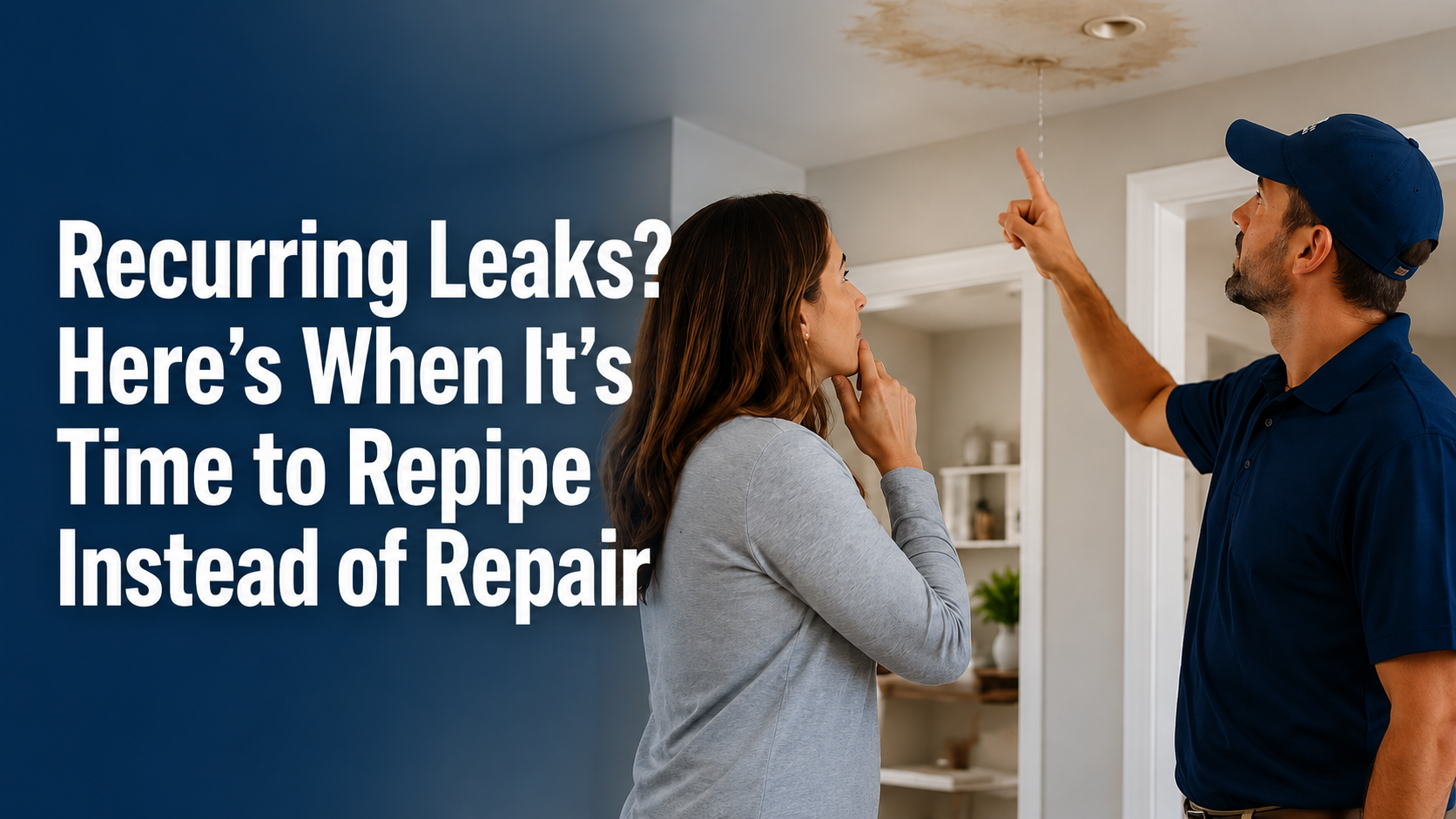
One leak can be bad luck. Multiple leaks in a house usually deserve a closer look. When the same repair keeps coming back, or when leaks begin showing up in different rooms, the problem may not be the one pipe that failed first. It may be the condition of the plumbing system as a whole.
That is the point where a repair conversation becomes a repipe conversation. LCP Home Services helps Southwest Florida homeowners look at the pattern, not just the newest puddle, so they can decide whether another repair is enough or whether a whole-home repipe evaluation is the smarter next step.
How do you know if a leak needs a repair or a repipe?
A leak usually needs a repair when it is isolated, easy to identify, and not part of a larger history. A leak may point toward a repipe when repairs keep repeating in the same area, when leaks happen in different parts of the home, or when pressure problems show up alongside the leaks.
In plain terms, a single failure can be a plumbing problem. A pattern of failures can be a system problem. That distinction matters because repairing the newest spot does not always solve the weakness that caused the next spot to fail.
Signs a leak is part of a bigger problem
The strongest warning sign is repetition. If a kitchen line was repaired last year, a bathroom supply line leaked this year, and now the laundry area is showing moisture, the home may be telling you something larger.
Homeowners should pay attention to repeated leaks in different locations, a repaired spot that fails again, corrosion or staining near visible piping, pressure changes that appear at the same time as leaks, or water damage that seems to move from one room to another.
The location of each leak also matters. A small leak at one exposed fixture connection may be straightforward. A leak behind a wall, under a slab, above a ceiling, or near an older branch line may deserve more attention, especially if the home already has a history of repairs. Hidden leaks can create damage before the homeowner sees water, which is why patterns should be taken seriously.
When a single leak is still just a repair
Repiping is not always the right first answer. If the leak is the first issue you have had, the pipe material is not concerning, the rest of the system looks stable, and water pressure is normal throughout the home, a targeted repair may be the best choice.
Pressure changes can also help separate a random leak from a larger concern. When pressure feels strong in one bathroom but weak in another, or when fixtures slow down after another pipe repair, the system may have restriction, corrosion, scale, or weakened piping in more than one area. Those clues help a plumber decide whether the newest leak is only the visible symptom.
This is why a good plumbing recommendation should not feel like a sales script. LCP Home Services can inspect the system and explain whether the evidence points to an isolated repair or a larger pipe concern.
What actually causes a system-wide pipe problem
A system-wide problem can come from several factors working together. Pipe material matters. So does pipe age, water pressure, water chemistry, installation history, and the way the home has been used over time.
In Southwest Florida, homes may also deal with hard water conditions, humidity, storm-season moisture, chlorinated water, mineral buildup, and older construction materials. None of those factors automatically mean a home needs repiping, but they can help explain why one leak becomes the first sign of a larger issue.
The most important question is not only where the leak happened. It is whether the rest of the piping is likely to keep failing.
What a whole-home repipe actually involves
A whole-home repipe replaces aging or problematic water supply lines with new piping routed to the fixtures that need service. The exact plan depends on the size of the home, access points, pipe material, water heater location, number of fixtures, and whether drywall or finish work is included.
The goal is to create a more dependable plumbing foundation, not to tear up the home without a plan. A repipe should begin with an inspection, a written scope of work, and a clear explanation of what will be replaced.
If you are stuck deciding between another repair and a larger reset, schedule a whole-home repipe evaluation with LCP Home Services. We can help you understand whether your leak history is still repair territory or a sign that the piping system needs attention.
A good evaluation should also consider the homeowner’s plans. A family planning to stay in the home for years may value stability and reduced leak risk differently than someone handling one isolated repair before a renovation. There is no one-size answer. The right recommendation should match the condition of the plumbing and the way the homeowner uses the house.
Call 239-539-2325 or schedule service online to request your free whole-home evaluation.
FAQ
What does it cost to keep repairing the same leak over time compared to a repipe?
A single repair usually costs less than a repipe, but repeated service calls, drywall damage, flooring damage, mold concerns, and emergency repairs can make the long-term cost much higher. A whole-home evaluation helps compare the repair pattern against the cost of replacing the failing piping system.
Is it safe to use pipe tape or epoxy until I can get a leak looked at?
Temporary products may slow a minor leak for a short time, but they should not be treated as a permanent repair. If water is actively leaking, shut off the water if possible and call a plumber so the pipe can be evaluated safely.
How does a plumber decide if it is a repair issue or a repipe issue?
A plumber looks at leak history, pipe material, age, water pressure behavior, visible corrosion, location of failures, and whether the same type of problem is happening in multiple areas. The pattern matters as much as the newest leak.
Can one section of a home be repiped without redoing the whole system?
Yes, partial repiping can make sense when the problem is limited to one area. If the same material is failing throughout the home, a whole-home repipe may be the more dependable long-term solution.