How to Identify Polybutylene Pipes (And What to Do If You Have Them)
Polybutylene pipes can create confusion for homeowners because they often stay hidden until a repair, inspection, insurance review, or home sale brings them into the conversation. The home may not have an active leak, but once the material is identified, homeowners usually want one clear answer: what do I do now?
LCP Home Services helps Southwest Florida homeowners identify polybutylene plumbing, understand why it matters, and decide whether pipe replacement or a whole-home repipe is the right next step.
What is polybutylene pipe?
Polybutylene pipe is an older plastic water supply piping material that was commonly used in many homes built between 1985 and 1992. Some homes outside that range may still have it because of remodeling, repairs, or local construction history.
It is often called PB pipe, poly pipe, polybutylene plumbing, or sometimes misspelled as poly butylene. The main concern is not that every pipe fails immediately. The concern is that the material has a known risk profile and failures are not always visible before water damage begins.
How to identify polybutylene pipes in your home
Many homeowners first start looking in easy-access areas. Under sinks, look at the pipe coming out of the wall, not only the flexible supply line connected to the faucet. Near the water heater, look for older plastic pipe connected to valves or entering the wall. In a garage or utility room, look near shutoff valves and visible branch lines.
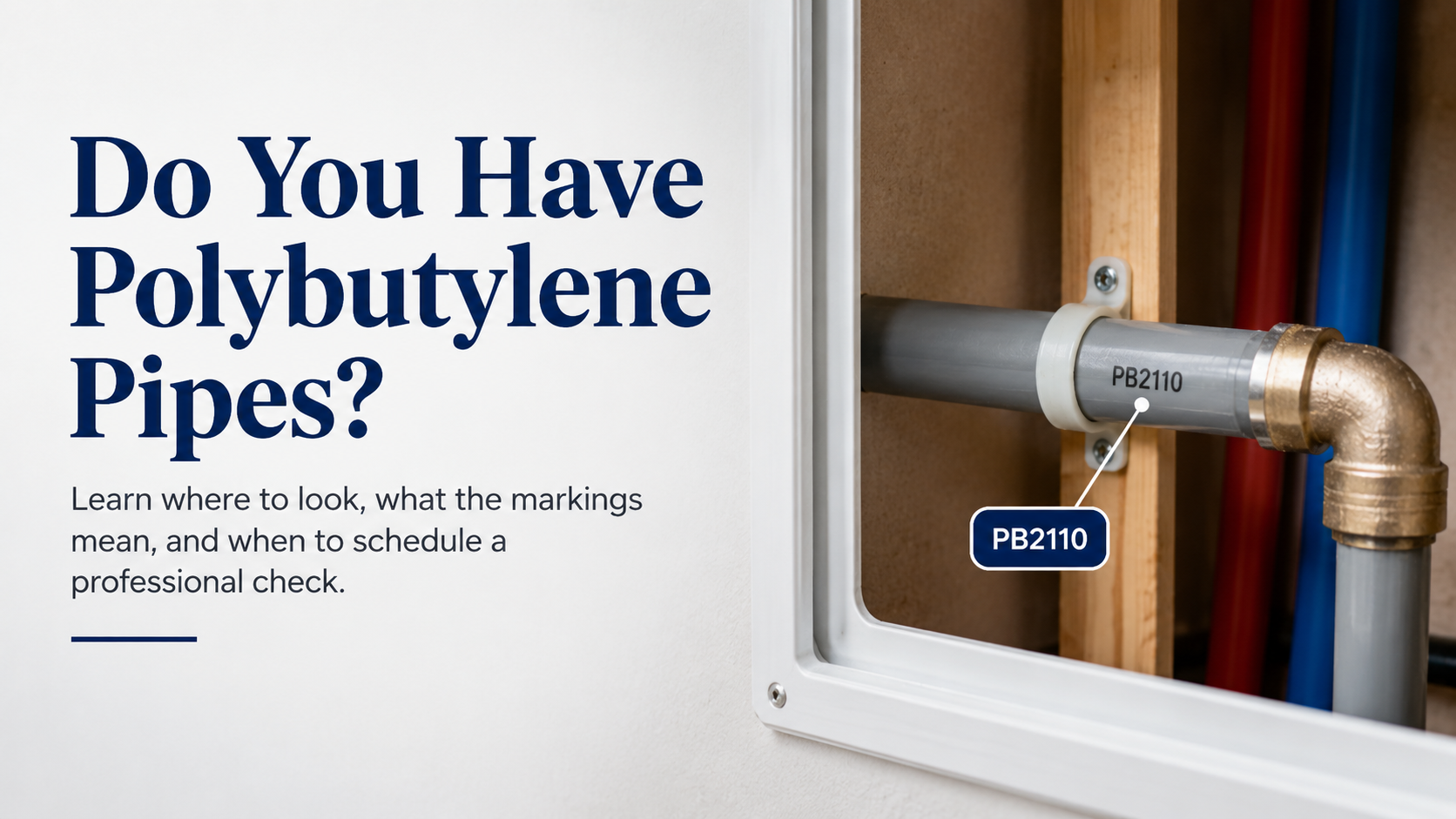
Polybutylene piping is often gray, but it can also appear blue, black, or silver-gray. Color alone is not enough to confirm it. The pipe may be visible near the water heater, under sinks, behind access panels, in garages, at shutoff valves, at stub-outs, or in attic and utility areas.
One of the strongest identifiers is a stamp such as PB2110 on an accessible pipe. Homeowners may also notice plastic fittings, crimp rings, or pipe routes that match older installation patterns. Because visual clues can be misleading, the safest next step is to have a plumber confirm the material.
Do not cut, bend, or disturb older piping just to check it. If the material is brittle, moving it can create the problem you were trying to avoid.
Why polybutylene pipes fail
Polybutylene concerns are often tied to how the material reacts over time to water treatment chemicals, pressure, fittings, and age. Chlorine exposure is one commonly discussed factor because it can contribute to brittleness and weakness inside the pipe.
The presence of polybutylene does not mean a leak will happen tomorrow. It does mean the home has material that deserves attention before an emergency, inspection deadline, insurance notice, or buyer objection forces the conversation at the worst possible time.
The difficult part is that damage may not be obvious from the outside. A pipe can look normal until a fitting leaks, a line splits, or water damage appears behind a wall. That uncertainty is why polybutylene frequently leads to replacement discussions even before the system has failed throughout the home.
Why insurance and home sales make polybutylene urgent
Many homeowners first hear the word polybutylene from an insurance carrier, inspector, buyer, or real estate agent. Insurance companies may ask questions about pipe material because water damage claims are expensive. Buyers may also worry about future leaks, repair costs, or whether coverage will be harder to secure after closing.
If you are dealing with an insurance notice, review the insurance-required repipe guide. If you are selling the home, review the home-sale repipe guide so you can understand how timing, documentation, and negotiations may work.
What to do if you find polybutylene pipes
First, confirm the material. Second, document what you can see without disturbing the pipe. Third, schedule a professional evaluation. A plumber can look at the visible system, review your concerns, and explain whether a section repair, partial replacement, or whole-home repipe is the best option.
If polybutylene is throughout the home, replacing only one leaking section may not remove the larger risk. That is why many homeowners choose full polybutylene pipe replacement instead of waiting for the next failure.
A professional check is especially important if you are not sure whether you are seeing the original pipe, a later repair, or a different plastic material. Many homeowners confuse similar-looking materials. A plumber can look for markings, fittings, routing, age clues, and transition points that help confirm the answer.
Polybutylene pipe replacement in SW Florida
A polybutylene repipe replaces aging or problematic water supply lines with modern piping selected for the home. The project scope depends on fixture count, access, home layout, pipe routing, and whether drywall or finish work is included.
LCP Home Services provides repiping services for homeowners in Fort Myers, Cape Coral, Lehigh Acres, Bonita Springs, Estero, Naples, North Fort Myers, and nearby Southwest Florida communities. The goal is to give homeowners a clear answer, not create panic.
If you think your home may have polybutylene pipes, schedule a free whole-home evaluation. LCP Home Services can confirm the material, explain the risk, and help you decide what to do next.
Call 239-539-2325 or schedule service online to request a polybutylene pipe check.
FAQ
Can polybutylene pipe be replaced in sections instead of the whole home at once?
Sometimes a section can be replaced, especially if the piping is limited to one area. If polybutylene serves the whole home, a full repipe is often the more dependable long-term solution.
Does having polybutylene pipe affect home resale value beyond the insurance issue?
It can. Buyers, inspectors, lenders, and agents may treat polybutylene as a negotiation concern even when there is no active leak. A completed repipe can help remove that uncertainty.
How can I request a polybutylene check if I do not have prior service history with a plumber?
Call LCP Home Services and ask for a pipe material evaluation. A plumber can inspect accessible areas and explain whether the visible piping appears to be polybutylene.
Is polybutylene pipe banned or illegal to leave in a home?
Having polybutylene in an existing home is not automatically illegal, but it is a known risk material that can create insurance, inspection, resale, and leak concerns. A professional evaluation can help determine the best next step.